Your website is often the very first impression a potential customer forms about your business, and that impression gets made in a matter of seconds. Before someone reads a single word of your content or checks your pricing, they have already judged your credibility based on how your site looks, loads, and feels to use. This is exactly why investing in proper website design services is not a luxury reserved for large corporations. It is one of the most direct paths to sustainable business growth available to any company today.
We have worked with businesses at every stage of growth, and one pattern shows up consistently. Companies that treat their website as a real asset, rather than a one-time expense, see stronger engagement, better conversion rates, and more consistent lead generation over time. If you want to see how this philosophy shapes the way we build every project, take a moment to explore our website design agency and the approach we bring to every client relationship.
This guide is meant to serve as a complete resource on why design matters so much for growth, and what separates a website that quietly works in the background to bring in business from one that sits there looking nice but doing very little.
First Impressions Happen Faster Than You Think
Visitors form an opinion about your website within seconds of it loading. That opinion influences whether they stay, explore further, or leave immediately for a competitor. A cluttered layout, outdated visuals, or confusing navigation sends an unspoken message that the business behind the website may not be as reliable or current as it claims to be.
On the other hand, a clean, professional, well-structured website builds instant trust. It tells visitors that you take your business seriously, and by extension, that you will take their needs seriously too. This is the foundation that everything else in this guide builds on.
Responsive Web Design: Meeting Customers Wherever They Are
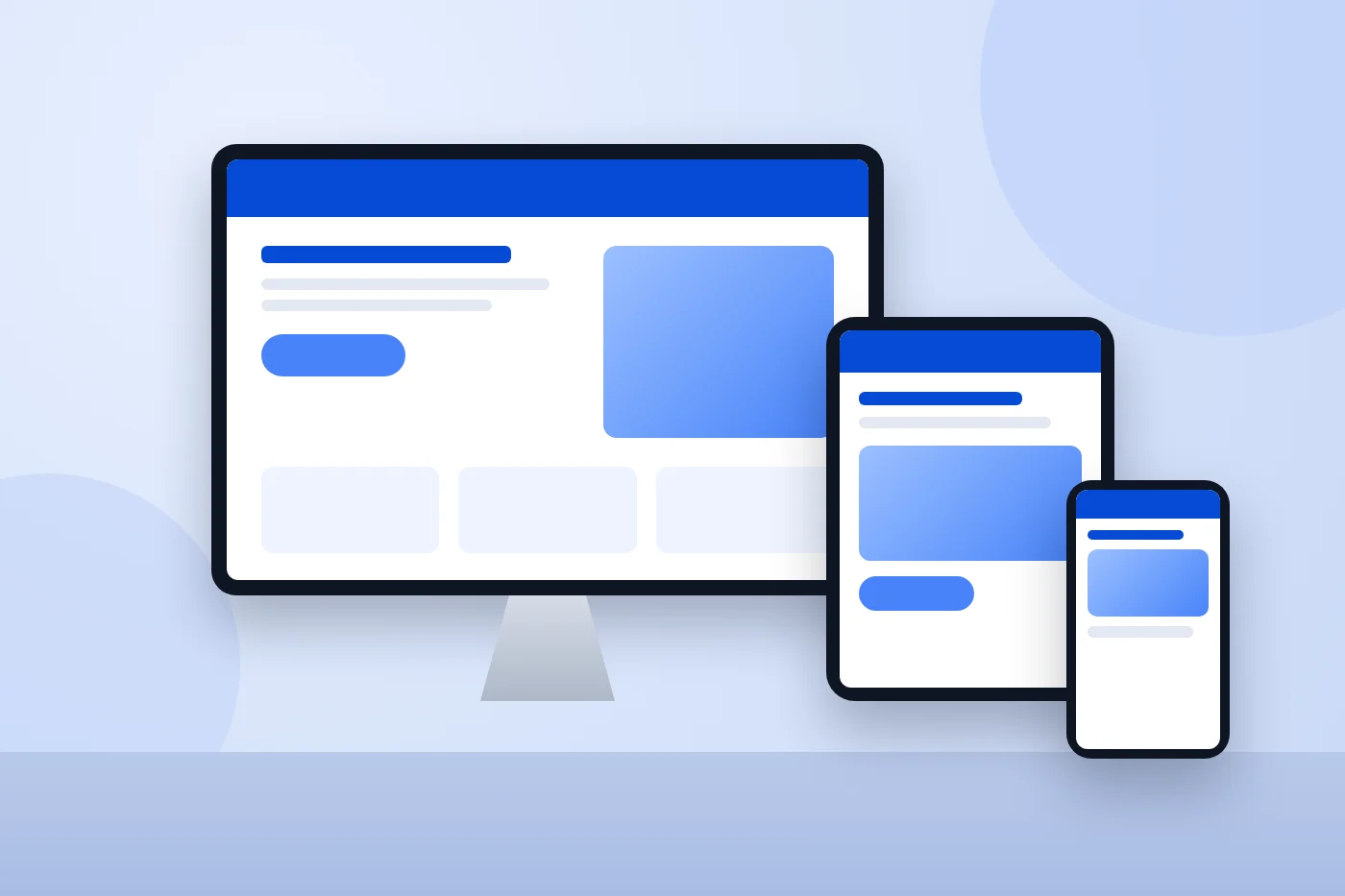
Responsive web design means your website automatically adjusts its layout, images, and navigation based on the device being used to view it, whether that is a desktop monitor, a tablet, or a smartphone. This is no longer an optional feature. It is a baseline expectation.
When a website is not responsive, visitors on smaller screens often deal with text that is too small to read, buttons that are difficult to tap accurately, and images that either overflow the screen or load painfully slowly. Every one of these frustrations increases the chance that a visitor leaves before taking any meaningful action.
A properly implemented responsive design solves this by using flexible layouts that reshape themselves intelligently across screen sizes. This means your homepage looks just as sharp and functional on a phone as it does on a large desktop display, without maintaining separate versions of your site.
Beyond user experience, responsive design also plays a role in how search engines evaluate your website, since modern indexing is largely based on how well a site performs on mobile devices. A site that fails here is working against itself in two ways at once, losing both visitors and visibility.
Mobile-Friendly Websites Are No Longer Optional
Related closely to responsiveness, but worth calling out on its own, is the broader idea of mobile-friendly websites. A huge share of web traffic today comes directly from smartphones, which means your mobile experience may actually be the primary way most visitors interact with your brand, not a secondary consideration.
A mobile-friendly website goes beyond simply resizing content. It considers how people actually use their phones, including thumb-friendly button placement, simplified menus, fast-loading pages on mobile networks, and forms that are easy to complete without excessive typing. Every extra tap or moment of confusion on a mobile device increases the likelihood that a potential customer abandons the page entirely.
Businesses that prioritize this experience consistently see stronger engagement from mobile visitors, simply because the friction that normally causes people to leave has been deliberately removed.
UX Design: The Difference Between Looking Good and Working Well
There is an important distinction between a website that looks visually appealing and one that is genuinely easy and satisfying to use. This is where UX design becomes essential. UX, or user experience design, focuses on how visitors move through your site, how intuitively they find what they are looking for, and how naturally they are guided toward taking action.
Good UX design considers factors like logical navigation structure, clear calls to action, readable typography, appropriate use of white space, and page load speed. It also involves understanding your actual customers well enough to anticipate what they are looking for and removing any unnecessary steps between their arrival on your site and the action you want them to take, whether that is filling out a form, making a purchase, or picking up the phone.
A website can be beautifully designed and still perform poorly if the user experience underneath that design is confusing or frustrating. This is why we always approach design and user experience together rather than treating visual style as a separate consideration from functionality. If you want to see the specific process we follow to combine both, our team would love to walk you through our full range of website design services and how each project is structured around real user behavior, not just aesthetics.
How Website Design Directly Impacts Business Growth
It is worth connecting these design principles directly to business outcomes, since that connection is often overlooked.
Higher conversion rates. A well-designed website removes friction from the buying or inquiry process, which directly increases the percentage of visitors who take action instead of leaving without engaging.
Stronger brand credibility. Professional design signals competence and trustworthiness, which matters enormously for businesses competing in industries where customers are comparing multiple options before making a decision.
Better search visibility. Search engines factor in user experience signals, page speed, and mobile usability when determining rankings, meaning a well-built website often performs better in search results simply as a byproduct of good design.
Improved customer retention. A pleasant, easy-to-navigate website encourages repeat visits and builds familiarity, which supports long-term customer relationships rather than one-time interactions.
More efficient marketing spend. If you are investing in advertising or content marketing to drive traffic, a website that fails to convert that traffic effectively wastes a significant portion of that investment. Good design protects the value of every other marketing dollar you spend.
Common Design Mistakes That Quietly Hurt Growth
Even well-intentioned businesses fall into a handful of recurring design mistakes that slow down growth without being immediately obvious.
Slow page load times frustrate visitors and increase abandonment rates before your content ever has a chance to make an impression. Cluttered layouts with too many competing calls to action confuse visitors about what they should do next. Inconsistent branding across pages weakens trust and makes a business appear less established than it actually is. Outdated visual styles can make even a legitimate, high-quality business look neglected or behind the times. Finally, ignoring accessibility considerations excludes a meaningful portion of potential visitors and customers from being able to use the site effectively at all.
Addressing these issues does not always require a complete rebuild. In many cases, a focused set of improvements can meaningfully shift performance without starting from scratch.
What to Look for When Investing in Website Design Services
If you are evaluating options for improving your website, keep these priorities in mind. Look for a team that asks about your business goals before jumping straight into visual concepts. Prioritize responsive and mobile-friendly execution as a non-negotiable baseline rather than an add-on feature. Pay attention to how much emphasis is placed on user experience and conversion pathways, not just visual style. Ask to see real examples of past work, along with any measurable outcomes tied to those projects. Confirm that ongoing support and updates are part of the conversation, since a website should evolve alongside your business rather than being treated as a finished, static product.
Building a Website That Works as Hard as You Do
A great website is never really finished. It should be treated as a living asset that gets refined over time based on real user behavior, business goals, and shifts in your industry. The businesses that see the strongest long-term growth from their websites are the ones that view design as an ongoing investment rather than a single project to check off a list.
This is the mindset we bring to every client relationship, and it is why we focus so heavily on combining strong visual design with genuine usability and mobile performance rather than treating any one of these elements in isolation.
If you are ready to see what a website built around real growth could look like for your business, we would love to talk with you. You can learn more about our team and the philosophy behind how we approach every project, or you can get in touch with us today to start a conversation about what your website could be doing for you.
Your website should be one of your hardest-working assets, not a digital brochure that sits quietly in the background. With the right combination of responsive design, thoughtful UX, and genuine mobile usability, it can become one of the most reliable drivers of growth your business has.
Frequently Asked Questions
What should I look for in professional website design services?
Look for a team that prioritizes responsive design, strong user experience, and mobile usability alongside visual style, and that can show real examples of past results rather than just design portfolios.
Why is responsive web design so important for business growth?
Responsive web design ensures your site functions properly across every device, which prevents lost visitors due to poor mobile experiences and supports better search engine performance.
What is the difference between web design and UX design?
Web design typically refers to the visual style and layout of a website, while UX design focuses on how easily and intuitively visitors can navigate the site and complete desired actions.
How do mobile-friendly websites affect conversion rates?
Since a large share of visitors browse on smartphones, a website that is not optimized for mobile often loses potential customers due to frustration, directly reducing conversion rates.
How often should a business update its website design?
There is no fixed timeline, but most businesses benefit from reviewing their website's design and performance at least once a year to ensure it still reflects current branding, user expectations, and technical standards.